Understanding Osteoporosis and Spine Fractures in the Elderly
Published on July 11, 2026
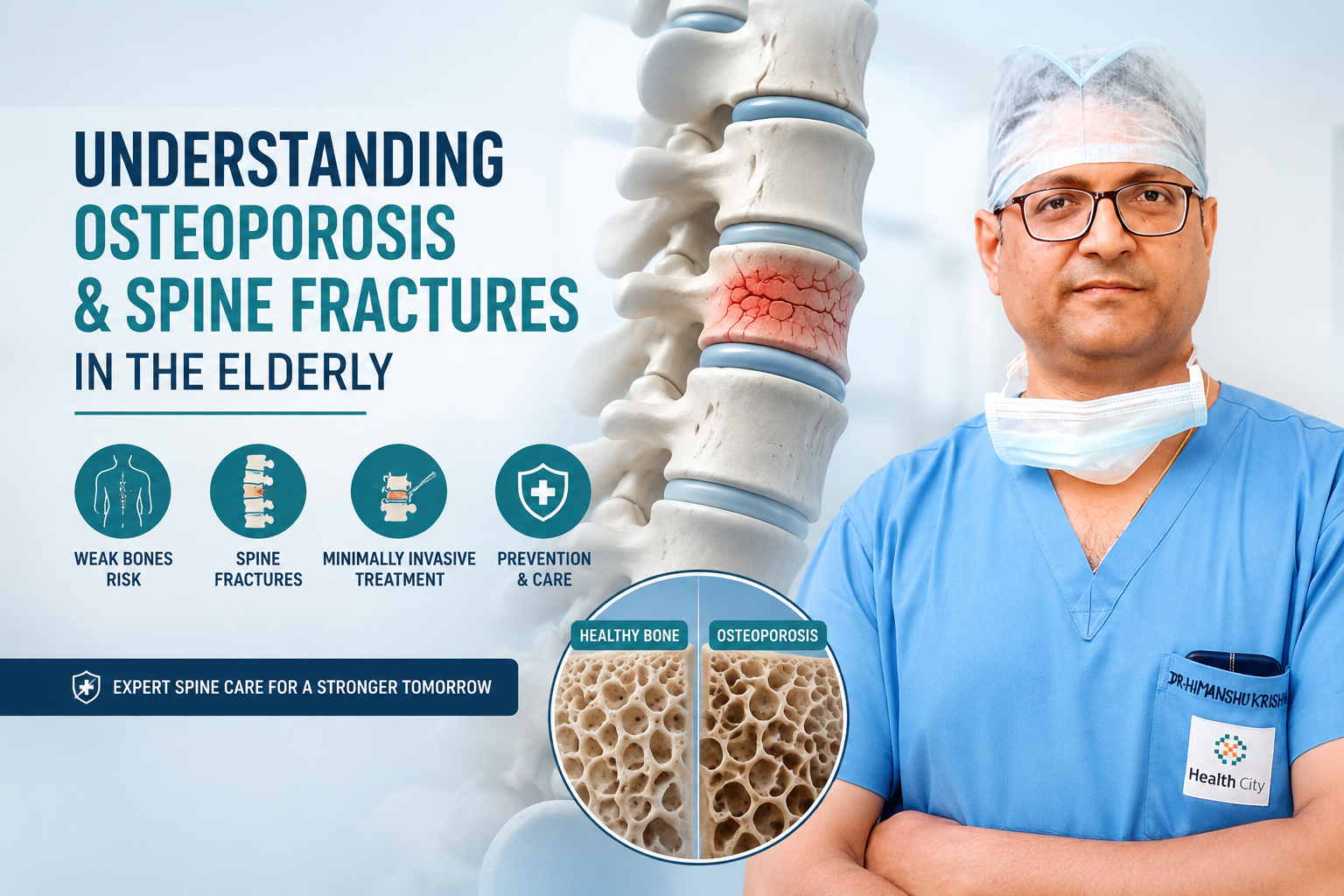
Introduction
As people age, maintaining strong bones becomes increasingly important for preserving mobility, independence, and overall quality of life. One of the most common yet often overlooked conditions affecting older adults is osteoporosis, a disease that weakens bones and significantly increases the risk of fractures.
Among all osteoporotic fractures, spinal compression fractures are particularly concerning because they can lead to chronic pain, loss of height, poor posture, breathing difficulties, and reduced quality of life.
Understanding the relationship between osteoporosis and spinal fractures is essential for early diagnosis, effective treatment, and long-term prevention. Modern minimally invasive spine procedures now allow many elderly patients to recover quickly while reducing pain and improving mobility.
What is Osteoporosis?
Osteoporosis is a condition where bones gradually lose their density and strength, becoming fragile and more likely to break. The disease often develops silently over many years without causing symptoms until a fracture occurs.
Healthy bone constantly rebuilds itself. As we age, especially after the age of 50, the body begins breaking down bone faster than it can replace it. This imbalance causes bones to become porous and weak.
Osteoporosis most commonly affects:
- Women after menopause
- Men above 65–70 years
- Individuals with Vitamin D deficiency
- People taking long-term steroid medications
- Smokers
- Heavy alcohol consumers
- Patients with certain hormonal disorders
Why the Spine is Highly Vulnerable
The vertebrae that form the spinal column constantly bear the body's weight. As osteoporosis progresses, these bones become weaker and unable to withstand even normal daily activities.
Unlike traumatic fractures caused by accidents, osteoporotic spine fractures may occur while:
- Bending forward
- Lifting a light object
- Sneezing
- Coughing
- Getting out of bed
- Sitting for prolonged periods
Sometimes patients cannot even identify when the fracture occurred.
Understanding Vertebral Compression Fractures
A vertebral compression fracture happens when one or more vertebrae collapse due to weakened bone strength.
The fractured vertebra loses height and changes its normal shape, resulting in spinal deformity.
These fractures most commonly affect:
- Mid-back (Thoracic Spine)
- Lower back (Lumbar Spine)
Multiple untreated fractures may eventually produce the characteristic forward bending posture known as a Dowager's Hump (Kyphosis).
Common Symptoms of Osteoporotic Spine Fractures
Symptoms can vary depending on the severity of the fracture.
Typical warning signs include:
- Sudden severe back pain
- Pain after minor movement or lifting
- Height loss over time
- Stooped posture
- Difficulty standing upright
- Pain while walking
- Muscle spasms
- Limited spinal movement
- Difficulty sleeping due to pain
In some patients, pain gradually improves while the spinal deformity continues to worsen.
Risk Factors You Should Know
Several factors increase the likelihood of osteoporosis and spinal fractures.
Age
Bone density naturally declines with age.
Gender
Women after menopause experience rapid bone loss because estrogen levels decrease significantly.
Family History
Individuals with a family history of osteoporosis are at greater risk.
Poor Nutrition
Low calcium intake and Vitamin D deficiency weaken bone structure.
Sedentary Lifestyle
Lack of physical activity accelerates bone loss.
Smoking and Alcohol
Both reduce bone quality and interfere with normal bone healing.
Medical Conditions
Certain diseases such as thyroid disorders, rheumatoid arthritis, kidney disease, and long-term steroid use increase fracture risk.
How Osteoporosis is Diagnosed
Early diagnosis plays a critical role in preventing serious complications.
Your doctor may recommend:
Bone Mineral Density (DEXA Scan)
This is the gold standard test used to measure bone density.
X-rays
Useful for identifying spinal compression fractures.
MRI Scan
MRI helps determine whether a fracture is recent or old and checks for nerve compression.
CT Scan
Provides detailed images of spinal anatomy and fracture patterns.
Blood Tests
These help identify underlying causes such as Vitamin D deficiency, calcium imbalance, or hormonal disorders.
Treatment Options for Osteoporosis
Managing osteoporosis involves strengthening bones while preventing future fractures.
Treatment may include:
- Calcium supplements
- Vitamin D supplementation
- Bisphosphonate medications
- Denosumab injections
- Teriparatide therapy
- Lifestyle modifications
- Regular exercise
- Fall prevention strategies
Your treatment plan should always be personalized according to age, bone density, medical history, and fracture risk.
Treating Osteoporotic Spine Fractures
Treatment depends on:
- Pain severity
- Number of fractures
- Degree of spinal collapse
- Neurological symptoms
- Overall patient health
Conservative Treatment
Many mild fractures improve with:
- Pain medications
- Short-term spinal braces
- Physiotherapy
- Controlled physical activity
- Osteoporosis medications
However, persistent pain may require minimally invasive intervention.
Modern Minimally Invasive Spine Procedures
Today's advances in spine surgery have transformed treatment for elderly patients.
Kyphoplasty
Kyphoplasty is a minimally invasive procedure performed through a very small incision.
During the procedure:
- A tiny balloon is inserted into the fractured vertebra.
- The balloon restores vertebral height.
- Medical bone cement is injected to stabilize the bone.
Benefits include:
- Immediate pain relief
- Restoration of spinal alignment
- Improved posture
- Faster recovery
- Minimal blood loss
- Short hospital stay
Vertebroplasty
Vertebroplasty involves injecting special medical bone cement directly into the fractured vertebra.
The cement stabilizes the fracture, significantly reducing pain while preventing further collapse.
This procedure is suitable for selected patients after careful evaluation by an experienced spine surgeon.
Rehabilitation After Treatment
Recovery does not end after surgery or medication.
Successful rehabilitation includes:
- Guided physiotherapy
- Core strengthening exercises
- Balance training
- Walking programs
- Proper posture correction
- Fall prevention education
Patients who remain physically active generally experience better long-term outcomes.
Nutrition for Strong Bones
Diet plays an essential role in maintaining healthy bones.
Important nutrients include:
Calcium
Sources include:
- Milk
- Yogurt
- Cheese
- Green leafy vegetables
- Almonds
Vitamin D
Sources include:
- Morning sunlight
- Eggs
- Fatty fish
- Fortified dairy products
Protein
Protein supports bone repair and muscle strength.
Healthy sources include:
- Lentils
- Beans
- Chicken
- Fish
- Eggs
Lifestyle Changes That Help Prevent Spine Fractures
Simple lifestyle habits can dramatically reduce fracture risk.
- Exercise regularly
- Walk every day
- Perform weight-bearing exercises
- Improve balance and flexibility
- Maintain healthy body weight
- Quit smoking
- Limit alcohol intake
- Get adequate sunlight exposure
- Keep your home free from fall hazards
When Should You See a Spine Specialist?
Consult a neurosurgeon or spine specialist immediately if you experience:
- Sudden severe back pain
- Height loss
- Stooped posture
- Persistent pain after a fall
- Difficulty walking
- Numbness or weakness in the legs
- Loss of bladder or bowel control
Early intervention often prevents long-term disability.
Can Osteoporosis Be Prevented?
Although aging cannot be stopped, osteoporosis can often be delayed or prevented through healthy lifestyle choices.
Regular bone density screening, proper nutrition, exercise, and early treatment significantly reduce the likelihood of fractures.
People at high risk should discuss osteoporosis screening with their healthcare provider before fractures occur.
Frequently Asked Questions
Can osteoporosis be cured?
Osteoporosis cannot be completely cured, but modern treatments can slow bone loss, strengthen bones, and greatly reduce fracture risk.
Are spinal fractures always painful?
Not always. Some fractures cause severe pain, while others develop gradually and may go unnoticed until height loss or posture changes appear.
Is surgery necessary for every spinal fracture?
No. Many fractures heal with medications, braces, and physiotherapy. Surgery is considered when pain is severe, persistent, or spinal stability is compromised.
How long does recovery take?
Recovery varies depending on the patient's age, overall health, and treatment method. Many patients undergoing minimally invasive procedures experience significant pain relief within days.
Dr. Himanshu Krishna
Chief Neurosurgeon & Head of Neurosurgery & Spine