Living with a Brain Tumor: A Comprehensive Guide
Published on July 11, 2026
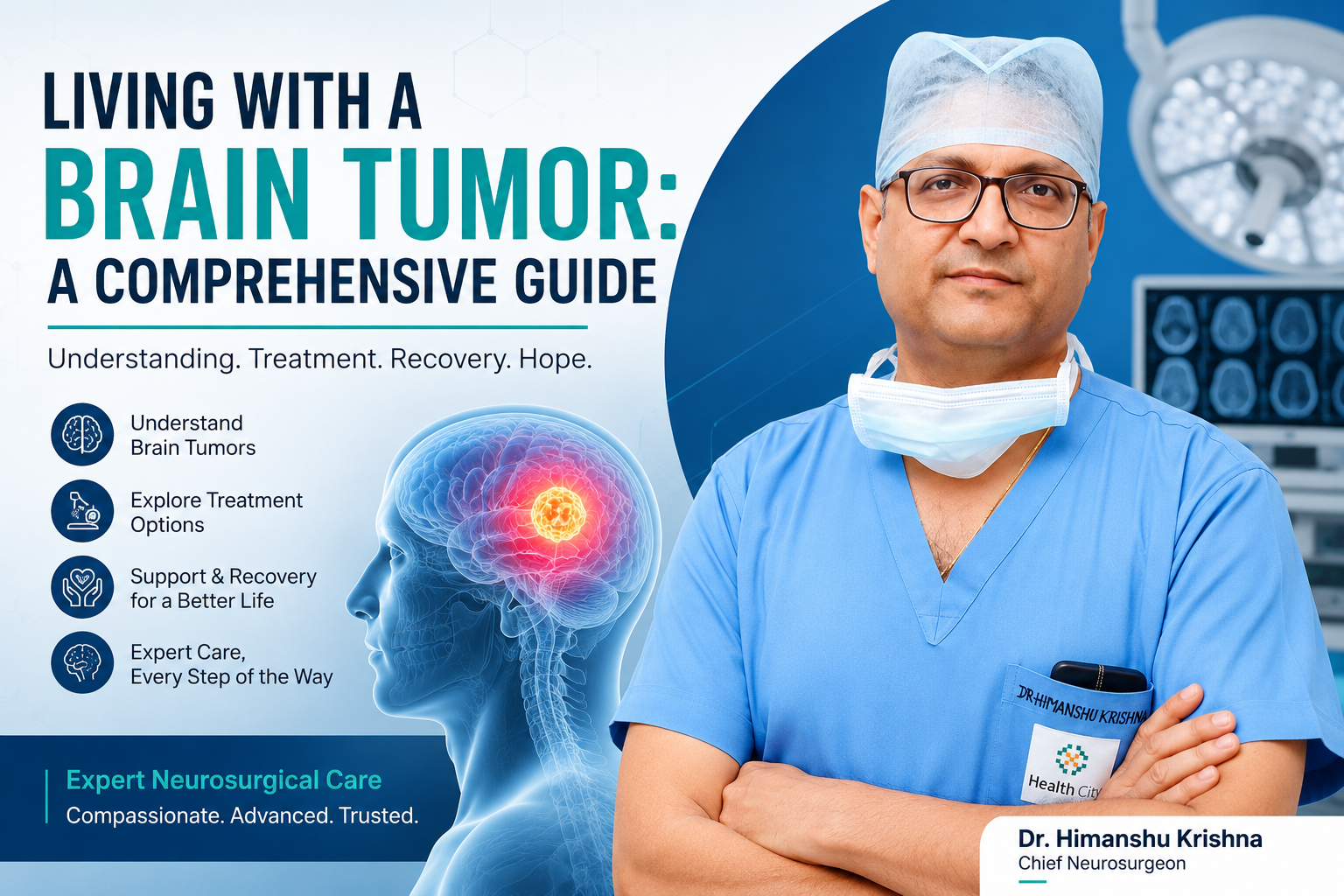
Understanding a Brain Tumor Diagnosis
Being diagnosed with a brain tumor can be one of the most overwhelming experiences for both patients and their families. It is natural to feel anxious, confused, or uncertain about what lies ahead. However, it is important to understand that a brain tumor diagnosis does not always mean cancer or a poor outcome. Many brain tumors are benign (non-cancerous), and even malignant tumors can often be managed effectively with modern neurosurgical techniques, targeted therapies, and comprehensive rehabilitation.
Early diagnosis, timely treatment, and the guidance of an experienced neurosurgeon play a critical role in improving outcomes. Advances in neurosurgery have made treatments safer, more precise, and associated with faster recovery than ever before.
What is a Brain Tumor?
A brain tumor is an abnormal growth of cells within the brain or its surrounding tissues. Tumors can develop directly in the brain (primary brain tumors) or spread from cancers in other parts of the body (secondary or metastatic brain tumors).
Brain tumors vary significantly in their behavior. Some grow slowly over many years without causing major symptoms, while others may grow rapidly and require immediate medical attention.
Brain tumors may affect:
- Brain tissue
- Cranial nerves
- Pituitary gland
- Brain coverings (meninges)
- Blood vessels surrounding the brain
The symptoms depend largely on the tumor's location, size, and growth rate.
Common Types of Brain Tumors
Gliomas
Gliomas arise from the brain's supporting glial cells. They include astrocytomas, oligodendrogliomas, and glioblastomas. Some are slow-growing, while others are highly aggressive.
Meningiomas
Meningiomas develop from the protective membranes covering the brain. They are usually benign and often grow slowly. Many patients recover completely after surgical removal.
Pituitary Tumors
These tumors occur in the pituitary gland and may affect hormone production, vision, fertility, metabolism, and overall endocrine health.
Acoustic Neuromas
Also called Vestibular Schwannomas, these tumors develop on the nerve responsible for hearing and balance.
Common symptoms include:
- Hearing loss
- Ringing in the ears (Tinnitus)
- Balance problems
- Facial numbness
Metastatic Brain Tumors
These tumors spread to the brain from cancers elsewhere in the body, such as lung cancer, breast cancer, kidney cancer, or melanoma.
Signs and Symptoms of a Brain Tumor
Brain tumor symptoms vary from person to person depending on where the tumor is located.
Common warning signs include:
- Persistent headaches that worsen over time
- Morning headaches
- Nausea or vomiting
- Seizures
- Blurred or double vision
- Difficulty speaking
- Weakness in the arms or legs
- Loss of balance
- Memory problems
- Personality or behavioral changes
- Difficulty concentrating
- Hearing problems
- Confusion
Not everyone experiences all these symptoms, and many can also be caused by other neurological conditions. Proper evaluation by a neurosurgeon is essential.
When Should You See a Neurosurgeon?
Seek immediate medical evaluation if you experience:
- Sudden seizures
- Progressive weakness
- Persistent headaches lasting several weeks
- Vision changes
- Difficulty speaking
- Loss of coordination
- Repeated vomiting without explanation
- Confusion or personality changes
Early diagnosis significantly improves treatment success and quality of life.
How Brain Tumors are Diagnosed
A thorough neurological examination is usually followed by advanced imaging studies.
Common diagnostic tests include:
MRI Brain
Magnetic Resonance Imaging (MRI) provides highly detailed images and is considered the gold standard for diagnosing brain tumors.
CT Scan
A CT scan is useful in emergency situations and helps detect bleeding, swelling, or large tumors.
Contrast MRI
Contrast-enhanced MRI helps determine tumor boundaries and blood supply.
Biopsy
A biopsy involves removing a small tissue sample to identify the exact tumor type and grade.
Advanced Imaging
Modern neurosurgical centers may also use:
- Functional MRI (fMRI)
- MR Spectroscopy
- Diffusion Tensor Imaging (DTI)
- PET Scan
- Neuronavigation planning
Treatment Options for Brain Tumors
Treatment depends on several factors including:
- Tumor type
- Size
- Location
- Patient age
- Overall health
- Tumor grade
A personalized treatment plan offers the best outcome.
Brain Tumor Surgery
Surgery is often the first line of treatment.
The primary goals include:
- Removing as much of the tumor as safely possible
- Relieving pressure inside the brain
- Improving neurological function
- Obtaining tissue for diagnosis
Modern microsurgical techniques and neuronavigation systems have greatly improved surgical precision.
Endoscopic Brain Surgery
Minimally invasive endoscopic surgery allows surgeons to remove certain tumors through very small openings.
Benefits include:
- Smaller incisions
- Less pain
- Reduced blood loss
- Shorter hospital stay
- Faster recovery
- Lower risk of complications
Radiation Therapy
Radiation therapy uses focused high-energy beams to destroy remaining tumor cells after surgery or treat tumors that cannot be safely removed.
Chemotherapy
Some brain tumors respond well to chemotherapy drugs that help slow or stop tumor growth.
Targeted Therapy and Immunotherapy
Newer treatments target specific molecular characteristics of tumors while minimizing damage to healthy tissue.
Recovery After Brain Tumor Surgery
Recovery varies depending on the complexity of surgery and the patient's overall condition.
Most patients benefit from:
- Physical therapy
- Occupational therapy
- Speech therapy
- Cognitive rehabilitation
- Regular neurological follow-up
Following your doctor's recommendations greatly improves recovery outcomes.
Living Well After a Brain Tumor Diagnosis
A brain tumor diagnosis changes life, but many patients continue to live active, fulfilling lives after treatment.
Healthy lifestyle habits include:
- Eating a balanced diet
- Staying physically active
- Getting adequate sleep
- Managing stress
- Taking medications as prescribed
- Attending regular follow-up appointments
- Avoiding tobacco and excessive alcohol
- Maintaining social and emotional support
Mental health support is equally important for both patients and caregivers.
Frequently Asked Questions
Can brain tumors be cured?
Many benign brain tumors can be completely cured with surgery. Some malignant tumors can be effectively controlled with a combination of surgery, radiation, and medical therapy.
Are all brain tumors cancerous?
No. A significant number of brain tumors are benign and do not spread to other organs.
Is brain tumor surgery safe?
Modern neurosurgery has become significantly safer due to advanced imaging, operating microscopes, neuronavigation, intraoperative monitoring, and minimally invasive surgical techniques.
Can I return to work after treatment?
Many patients successfully return to work and normal daily activities after recovery. The timeline depends on the tumor type, treatment received, and overall health.
When to Seek Immediate Medical Attention
Contact your healthcare provider immediately if you experience:
- Sudden severe headache
- New seizures
- Loss of consciousness
- Difficulty speaking
- Weakness on one side of the body
- Persistent vomiting
- Vision loss
- Sudden confusion
These symptoms require urgent medical evaluation.
Dr. Himanshu Krishna
Chief Neurosurgeon & Head of Neurosurgery & Spine