Headache Warning Signs: When to See a Neurosurgeon
Published on July 11, 2026
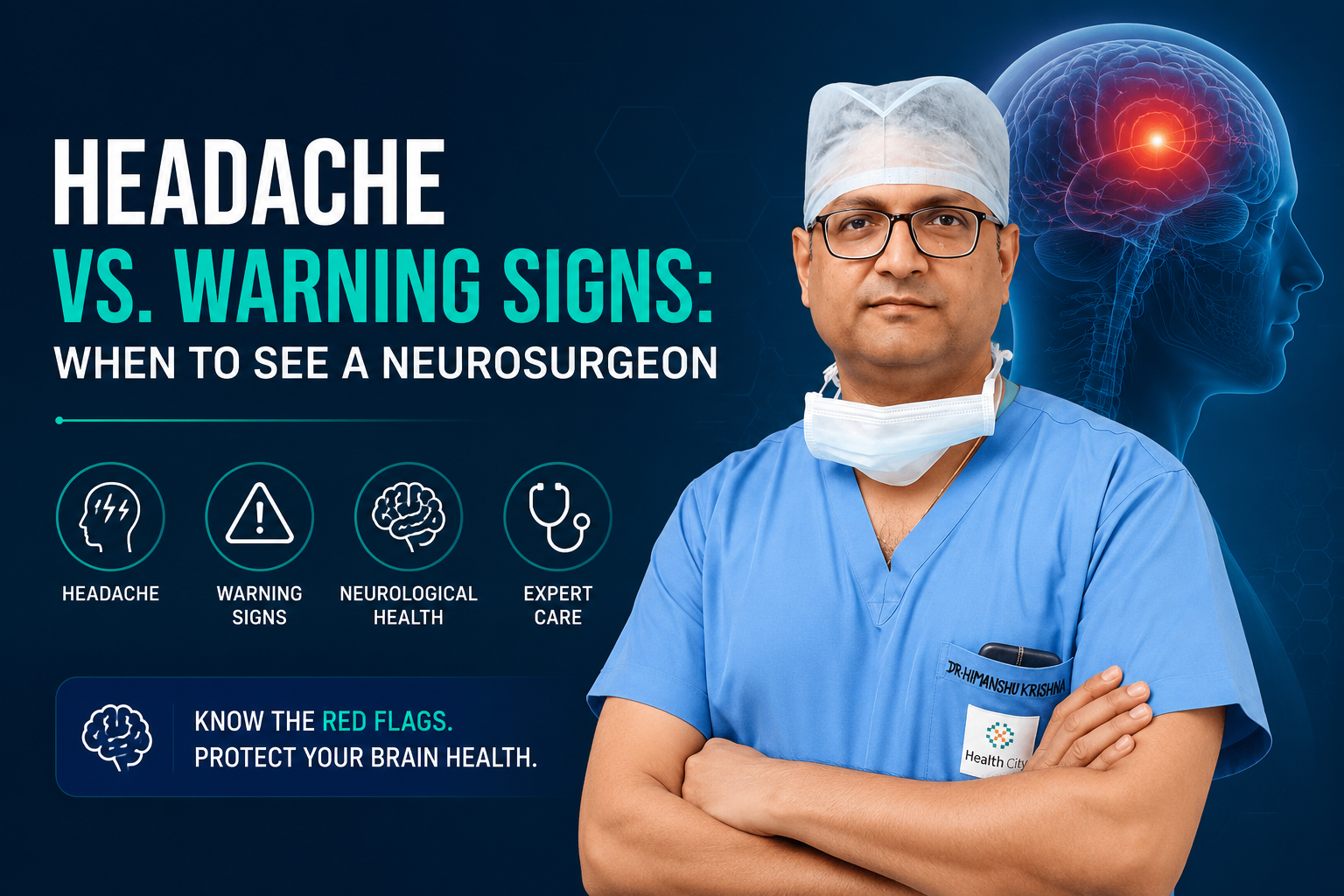
Not All Headaches Are Equal
Most headaches are harmless and are often caused by stress, lack of sleep, dehydration, eye strain, or migraine. These headaches usually improve with rest, hydration, and appropriate medication.
However, not every headache should be ignored.
Certain headaches can be the first warning sign of a serious neurological condition affecting the brain, spinal cord, or blood vessels. In some cases, a severe headache may indicate a life-threatening emergency such as a brain hemorrhage, brain tumor, aneurysm, stroke, meningitis, or increased pressure inside the skull.
Understanding the difference between a common headache and one that requires immediate medical attention can potentially save your life.
If your headache feels unusual, becomes progressively worse, or is accompanied by neurological symptoms, it is important to seek medical evaluation from an experienced neurosurgeon as soon as possible.
Understanding Different Types of Headaches
Headaches are generally classified into two major categories:
Primary Headaches
Primary headaches are not caused by another underlying disease. These include:
- Migraine
- Tension-type headaches
- Cluster headaches
These conditions can be painful but are usually not dangerous.
Migraine
Migraines often cause:
- Throbbing pain
- Pain on one side of the head
- Sensitivity to light and sound
- Nausea and vomiting
- Visual disturbances (Aura)
Migraines can last anywhere from a few hours to several days.
Tension Headaches
These are the most common headaches.
Symptoms include:
- Tightness around the forehead
- Pressure behind the eyes
- Neck stiffness
- Mild to moderate pain
Stress, poor posture, and long working hours are common triggers.
Cluster Headaches
Cluster headaches are extremely painful and usually occur around one eye.
Symptoms include:
- Severe burning pain
- Red eye
- Watery eye
- Runny nose
- Restlessness
Although rare, they require proper neurological evaluation.
Secondary Headaches: When the Headache Signals Something Serious
Secondary headaches occur because of another underlying medical condition.
Some of these conditions include:
- Brain Tumor
- Brain Hemorrhage
- Stroke
- Brain Infection
- Meningitis
- Hydrocephalus
- Increased Intracranial Pressure
- Brain Abscess
- Cerebral Aneurysm
These headaches should never be ignored.
Red Flag Symptoms That Require Immediate Medical Attention
Seek emergency medical care immediately if your headache is accompanied by any of the following warning signs.
1. Sudden "Thunderclap" Headache
If your headache reaches maximum intensity within seconds or minutes, it could indicate:
- Brain hemorrhage
- Ruptured aneurysm
- Stroke
This is considered a medical emergency.
2. The Worst Headache of Your Life
Many patients describe this as:
"The worst headache I have ever experienced."
This may be a sign of bleeding around the brain and requires immediate evaluation.
3. Persistent Headache That Continues to Worsen
A headache that gradually becomes worse over days or weeks should never be ignored.
Possible causes include:
- Brain tumor
- Increased brain pressure
- Chronic bleeding
- Brain swelling
4. Headache After a Head Injury
Any headache following:
- Road accident
- Fall
- Sports injury
- Trauma
should be evaluated, especially if associated with:
- Vomiting
- Drowsiness
- Confusion
- Memory loss
5. Headache with Fever and Neck Stiffness
This combination may indicate:
- Meningitis
- Brain infection
- Encephalitis
Immediate medical treatment is necessary.
6. Headache with Vision Changes
Blurred vision, double vision, or sudden loss of vision along with headache may indicate:
- Increased intracranial pressure
- Stroke
- Brain tumor
- Optic nerve disorders
7. Weakness or Numbness
If your headache occurs along with:
- Weakness in one arm
- Weakness in one leg
- Facial drooping
- Difficulty walking
- Difficulty speaking
Call emergency medical services immediately.
These symptoms may indicate a stroke.
8. New Headaches After Age 50
A new headache developing after the age of fifty should always be investigated.
Possible causes include:
- Giant Cell Arteritis
- Brain tumors
- Stroke
- Other neurological disorders
9. Headaches That Wake You From Sleep
Frequent headaches occurring during the night or early morning may be associated with:
- Increased pressure inside the brain
- Brain tumors
- Sleep disorders
Professional neurological assessment is recommended.
10. Headaches Triggered by Coughing or Straining
Headaches that worsen while:
- Coughing
- Sneezing
- Bending forward
- Lifting heavy objects
may indicate increased intracranial pressure and require further investigation.
When Should You See a Neurosurgeon?
You should consult a neurosurgeon if you experience:
- Persistent headaches lasting several weeks
- Headaches that continue to worsen
- Recurrent severe headaches without explanation
- Headaches associated with seizures
- Headaches with balance problems
- Headaches with numbness or weakness
- Headaches after trauma
- Headaches associated with vision changes
- Headaches that interfere with daily life
A neurosurgeon specializes in diagnosing and treating disorders involving the brain, spine, and nervous system.
Common Conditions Diagnosed by a Neurosurgeon
After careful evaluation, your neurosurgeon may diagnose conditions such as:
- Brain Tumor
- Hydrocephalus
- Brain Hemorrhage
- Cerebral Aneurysm
- Chiari Malformation
- Trigeminal Neuralgia
- Pituitary Tumor
- Brain Infection
- Chronic Subdural Hematoma
- Intracranial Hypertension
Early diagnosis significantly improves treatment outcomes.
How Headaches Are Evaluated
To determine the underlying cause, your doctor may recommend:
- Detailed neurological examination
- MRI Brain
- CT Scan
- CT Angiography
- MRI Angiography
- Blood investigations
- Lumbar puncture (when necessary)
These investigations help identify serious neurological disorders accurately.
Treatment Options
Treatment depends on the underlying cause.
Options may include:
- Lifestyle modification
- Hydration
- Migraine medications
- Preventive medicines
- Physical therapy
- Blood pressure control
- Infection treatment
- Minimally invasive neurosurgery
- Brain surgery (when necessary)
Your treatment plan will always be individualized based on your diagnosis.
Tips to Prevent Common Headaches
While not every headache can be prevented, healthy habits can significantly reduce their frequency.
Consider the following:
- Stay well hydrated
- Sleep for 7–8 hours every night
- Avoid skipping meals
- Exercise regularly
- Maintain good posture
- Reduce stress through relaxation techniques
- Limit excessive caffeine intake
- Avoid smoking and excessive alcohol
- Take breaks from prolonged screen time
Healthy lifestyle habits support better brain health.
Frequently Asked Questions
Can a headache be a sign of a brain tumor?
Most headaches are not caused by brain tumors. However, headaches associated with vomiting, seizures, vision changes, weakness, or progressive worsening should be evaluated promptly.
Should I worry about daily headaches?
Frequent or daily headaches lasting several weeks deserve medical assessment, particularly if they are becoming more severe.
Can migraines cause neurological symptoms?
Yes. Some migraines can temporarily cause visual disturbances, numbness, or speech difficulty. However, similar symptoms can also occur in stroke, making professional evaluation important.
When should I visit the emergency department?
Go to the emergency department immediately if your headache is sudden, extremely severe, follows a head injury, or is associated with confusion, seizures, weakness, fever, neck stiffness, or loss of consciousness.
Conclusion
Most headaches are benign and can be managed with appropriate lifestyle changes and medical treatment. However, certain warning signs should never be ignored. A sudden severe headache, persistent worsening pain, neurological symptoms, vision changes, seizures, or headaches following trauma require prompt medical evaluation.
Early diagnosis plays a crucial role in identifying serious neurological conditions and improving treatment outcomes. If you are experiencing persistent or unusual headaches, consult an experienced neurosurgeon for a comprehensive assessment and personalized treatment plan.
Dr. Himanshu Krishna
Chief Neurosurgeon & Head of Neurosurgery & Spine